We try to hold public observing at the Fuertes Observatory every Friday night when the weather at Cornell permits. Even if the weather is prohibitive for stargazing, we will still open up for tours of the observatory and its historic telescopes. This said, we generally advise visitors to come on clear nights so they can have a fantastic stargazing experience.
The best place to look to see if it's clear outside is up! If you can't see any stars where you are, there is good chance that we can't either. We also have some resources below to help you plan your visit!

 - Cherry Springs State Park, PA
 - Custer Institute in Southold, NY
 - Wakely Mountain in Adirondack Park, NY
 - Bryce Canyon National Park, UT
Be sure to check the sunset times listed to the right. Observing typically won't begin until an hour or so after sunset, and doesn't get spectacular until an hour and a half after sunset!
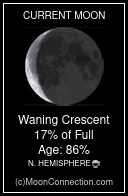
Unfortunately, a bright moon makes it harder to observe deep-sky objects. The best time to observe planets, galaxies, and nebulae is a new moon; however, brighter objects like planets are still visible during even a full moon.
But if you want to observe the moon instead, the best time is first or third quarter. Shadows help to accentuate the craters!